Every Door on the Page: A Quarterly Contact-Route Audit for UK Service Teams
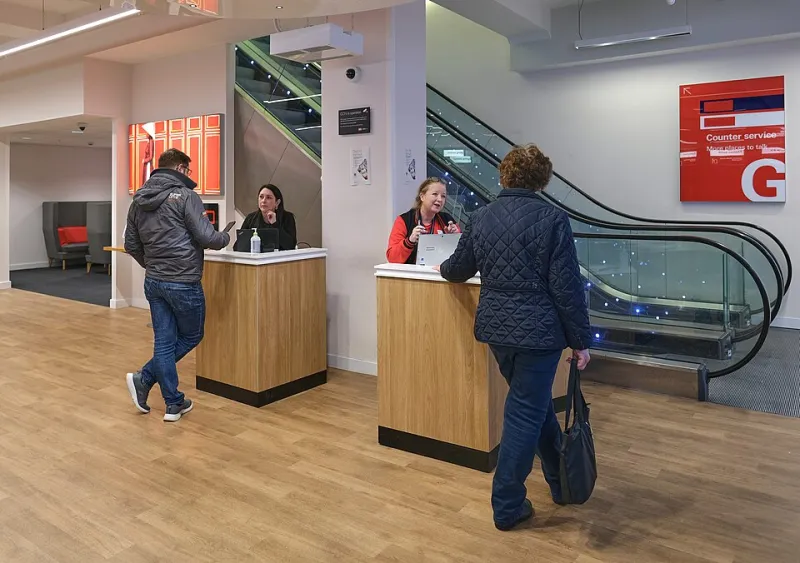
Photo: Anthony O'Neil , CC BY-SA 2.0, via Wikimedia Commons
A contact page is rarely treated as infrastructure. It is usually owned by communications, maintained by web operations and trusted by customers who have nowhere else to look. That arrangement is workable until the page becomes a public inventory of routes that no longer work. A number rings out, a portal redirects to a homepage, an inbox has no named owner and an opening-hours note quietly omits the bank holiday. None of these failures is dramatic on its own. Together they teach customers that the organisation is difficult to reach, even when the underlying service is competent.
The case for a quarterly contact-page audit is therefore not cosmetic. It is a channel-strategy control. The page is the first channel map most customers see, and it should be tested with the same discipline as any other route into the service estate.
The page is a channel map, not a brochure
UK organisations often publish contact routes in the same way they publish an address or a registered office: once, then rarely again. But a contact page is operational. It distributes demand across voice, email, web form, live chat, post and specialist portals. It sets expectations about response times and availability. It tells customers which door to use and what to do when that door does not open.
That makes the page a strategic asset. It also makes it vulnerable. Routes change when teams reorganise, suppliers migrate platforms, telephone systems are renumbered and inboxes are consolidated. Each change is local and reasonable. The cumulative effect is a public map that no longer matches the estate behind it.
A quarterly audit is frequent enough to catch drift before it becomes reputational, but not so frequent that it becomes a compliance ritual. The objective is simple: every published route should have an owner, a fallback and an honest response-time claim.
Define the unit of analysis: the published route
An audit should begin by listing every route the page publishes, not every team that believes it is listed. That means every telephone number, email address, web form, portal link, chat entry point, postal address and social-media destination. Each becomes a line in a register.
For each route, record the customer promise. A phone line may promise immediate answer during office hours. An email alias may promise a response within two working days. A portal may promise case tracking. A web form may promise an acknowledgement. These promises are the standards against which the audit tests the route.
The register should also record the route's operational owner, its technical owner and its backup. Without those three fields, the audit will identify problems but not fix them. Ownership is not a job title on an org chart; it is the named person or team who can confirm that the route is live, monitored and fit for the promise made on the page.
Test one: ownership
The first test is whether the route reaches a live owner. This is more than checking that a mailbox exists. It means confirming that someone is accountable for reading, routing and responding to what arrives. Shared inboxes without a rota are a common failure point. So are generic aliases that forward to a former employee or a supplier who has changed scope.
For telephone routes, ownership includes voicemail. A number that rings to a voicemail box nobody monitors is not a contact route; it is a delay mechanism. The audit should confirm who listens to the recording and within what period. For web forms, ownership includes the acknowledgement message and the ticket queue behind it. For portals, ownership includes the registration process and the support route when access fails.
A useful discipline is to ask each owner to confirm the route in writing during the audit window. That confirmation becomes evidence. It also prevents the page from being maintained by assumption.
Test two: fallback
Every route should have a published fallback. If the primary number is busy, what should the customer do? If the portal is down, where should they go? If the email alias is no longer monitored, what is the alternative? A contact page that offers only one path is brittle, especially for customers who cannot use that path at that moment.
Fallback should be specific. Sending customers to a general homepage is not a fallback; it is an abandonment with better branding. A proper fallback names the next route, states its availability and sets an expectation. For example: if the specialist portal is unavailable, use the main web form and include the case reference in the subject line. That is a route. A link to the homepage is not.
The audit should test the fallback as a customer would. Follow the published instruction. If it leads to another dead end, the route fails.
Test three: response-time accuracy
Response-time claims are promises, and they should be measured. An email route that says "we aim to respond within two working days" should be tested against actual first-response data. A phone line that says "calls are answered between 9am and 5pm" should be checked at the edges of those hours. A web form that promises an acknowledgement should be checked for that acknowledgement, not just for receipt.
This is where contact pages often diverge most sharply from operational reality. Teams may have improved their service internally while the page still publishes an old target. Or the target may have been tightened by a service-level agreement that the page owner never saw. Either way, the customer experiences the page as the contract.
The audit should distinguish between the published promise and the measured performance. Where they differ, the page or the service should be corrected. Publishing an accurate but modest target is better than publishing an aspirational one that damages trust.
Test four: route integrity
Route integrity covers the practical details that customers notice immediately. Are telephone numbers current and charged at the rate stated? Do portal links resolve to the correct destination? Are opening hours expressed in UK local time and do they account for bank holidays and seasonal changes? Are postal addresses complete enough to be used? Are social-media accounts monitored, or have they become broadcast-only channels that ignore replies?
This test also covers retirement. When a route is withdrawn, it should not simply disappear. A retired portal should redirect to an explanation and a live alternative. A discontinued email alias should return an auto-response that names the new route. Silent failure is the worst outcome because it leaves the customer unsure whether the message was received.
A quarterly cadence that produces evidence
A workable quarterly audit has four phases. In the first week, the page owner refreshes the route register and confirms ownership. In the second week, service teams run controlled tests: call the numbers, submit the forms, follow the fallbacks and check the response-time data. In the third week, findings are remediated or escalated, with a named owner and a due date for each action. In the fourth week, the evidence is signed off and the next quarter's audit window is set.
The output should be short. A one-page summary for service leadership, a route-level register for operations and a change log for web publishing are usually enough. The value lies in repetition: the same routes tested in the same way, quarter after quarter, so that drift is visible before customers report it.
The page as a service commitment
A contact page is not a directory of departments. It is a public statement about how an organisation can be reached. In 2026, with channel estates more distributed and more dependent on third parties than ever, that statement needs maintenance. A quarterly contact-route audit is a modest control, but it protects the first map customers use. It also gives UK service teams something more valuable than a tidy page: evidence that every published door opens somewhere.